 सकल गोर बंजारा
एकच सांस्कृतिक ओळख — विविध राज्यांतील तुलनात्मक पुरावे
Same cultural identity, documented through God and Sant traditions, Tanda life, Gor Boli, dress, history, social structure and state-wise reservation classification.
ही माहिती शैक्षणिक व जनजागृतीसाठी आहे. कायदेशीर पात्रता नेहमी अद्ययावत सरकारी अधिसूचनेनुसार ठरते.
तांडा संस्कृती : वस्ती, सामूहिक जीवन आणि परंपरा
What is a Tanda?
A Tanda is traditionally a Banjara settlement and social space formed around kinship, mobility, mutual support, leadership, common memory and shared cultural practices. Historically, the term was also associated with travelling groups and caravan organisation. In settled life, the Tanda developed as a distinct habitation unit.
Settlement pattern
Clusters of households, internal pathways, common meeting spaces, places of worship and links with fields, grazing or nearby villages.
Collective responsibility
Families traditionally cooperate during ceremonies, disputes, emergencies, agricultural work and festivals.
Community leadership
Traditional leadership roles and councils historically supported order and mediation. Modern constitutional law, Gram Panchayat institutions and formal administration remain legally supreme.
Hospitality and identity
Guest reception, food sharing, respect for elders, kinship and participation in community ceremonies are strong social values.
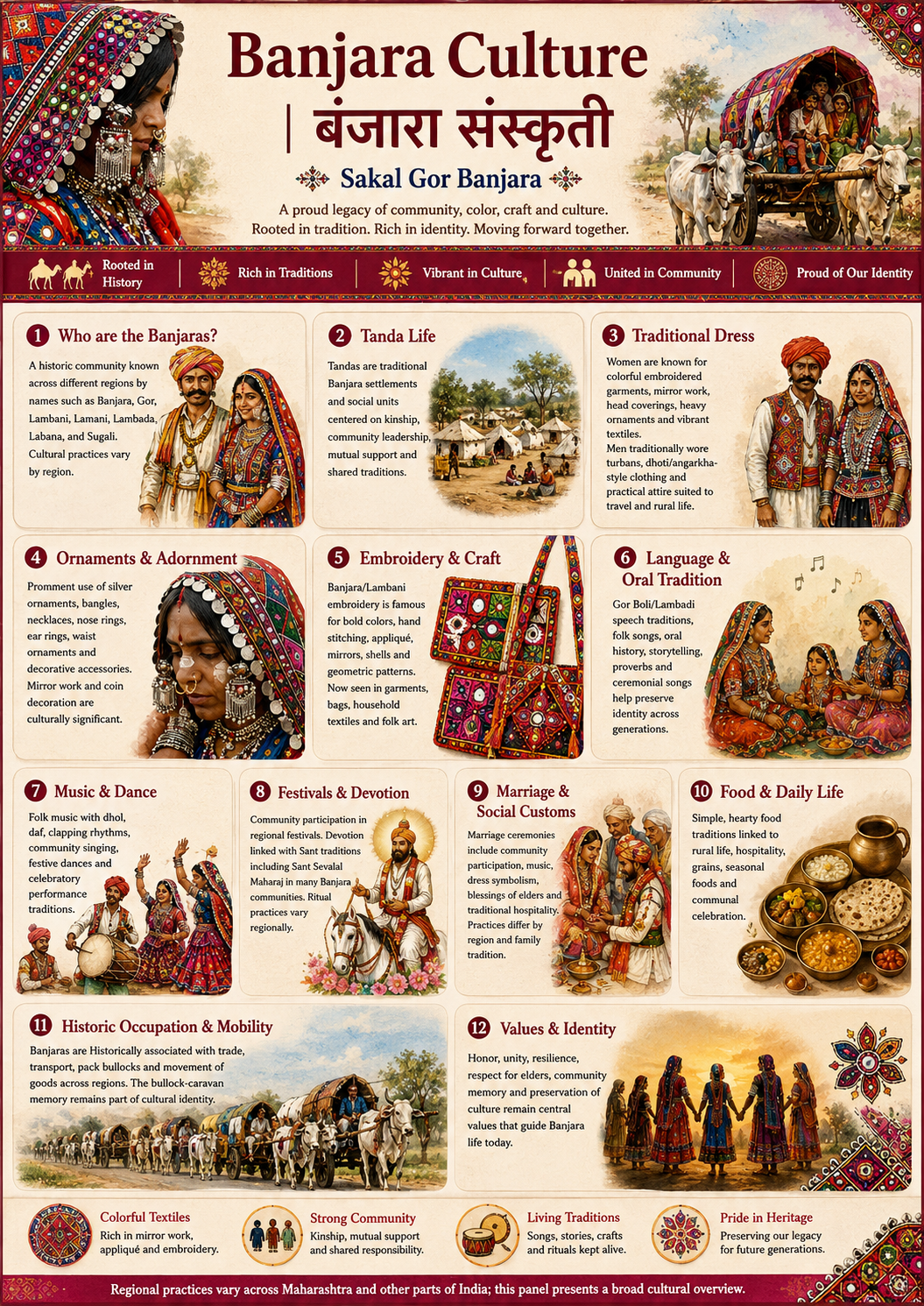
Living Tanda Culture
Language, dress, embroidery, songs, marriage customs, festivals and community memories are maintained through everyday Tanda life.
Birth & Childhood
Naming, blessings, family support and oral transmission of language and values.
Marriage
Collective participation, music, traditional attire, elders’ blessings and hospitality.
Festivals
Regional festivals, Sant Sevalal observances, seasonal gatherings and community worship.
Music & Dance
Dhol, daf, clapping rhythms, group songs, festive dancing and ceremonial performance.
Food
Grain-based rural food, seasonal ingredients, shared meals and generous hospitality.
Craft
Embroidery, mirror work, textile decoration and ornament traditions, especially associated with women’s skill.
Changing Tandas
Education, migration, urban employment and digital communication are reshaping, but not erasing, Tanda identity.
Preservation
Community archives, recorded oral histories, Gor Boli education and craft support are essential for continuity.
Published Comparative Evidence
Database records approved through the portal appear below.
Core official and research sources
Banjara ethnographic material on origin traditions, dress, occupations and cultural practices.
Open official repository documentOfficial framework for state-wise mother-tongue and language distribution research.
Open Census Language AtlasOfficial registration details for Sandur Lambani Embroidery, Karnataka.
Open GI registrationPrimary reference for comparing current notified Scheduled Tribe entries across states.
Open state-wise ST listVerification status: Educational comparative overview. Legal and historical records should be periodically rechecked against the latest official orders, reports and authenticated publications.